In a recent blog, we shared an update on the program of work we are leading to advance stablecoin readiness. The program is designed to help countries strengthen their regulatory approaches while prioritizing financial stability and consumer protection. It takes a multi-phased approach — examining global regulatory insights and translating them into deep regional and national engagements that reflect country-specific contexts.
This importance of the global-to-local approach across the program was reinforced in CGAP’s recent webinar, From Hype to Impact: What Stablecoins Mean for Financial Inclusion. During the discussion, Dorothée Delort from the World Bank crystallized the dilemma that regulators across emerging and developed markets increasingly face: how to uphold mandates for financial stability and consumer protection while still enabling innovation in payments. Stablecoins are now squarely at the center of this balancing act.
As adoption accelerates — particularly in markets grappling with high remittance costs, currency volatility, and underbanked populations — regulators are being pushed to move beyond theoretical debates and toward practical policy choices. We’ve moved past asking if stablecoins matter. The real question now is how they should be governed.
At the heart of the regulatory challenge are a set of interlinked policy questions:
These questions are not abstract. In many African and other emerging markets, dollar-linked stablecoins are already being used informally for savings, payments, and remittances. Ignoring this reality risks pushing activity further into unregulated spaces. Overregulating, however, risks stifling innovation that could meaningfully expand financial inclusion.
Global standard-setting bodies such as the Financial Stability Board (FSB) and IOSCO have made important progress in articulating high-level principles for stablecoin regulation. Their work has brought greater clarity on issues such as reserve backing, governance, consumer protection, and systemic risk.
Yet global standards are, by design, abstracted from local realities. They cannot fully account for differences in monetary regimes, financial sector depth, levels of informality, or supervisory capacity. For many regulators, the hardest work begins after the standards are published: translating them into rules, supervisory approaches, and sequencing decisions that make sense in their own markets.
One practical way to bridge the gap between global frameworks and local needs is to start with baseline functional principles. Rather than getting caught up in labels or technologies, this approach asks a simpler question: What does this activity actually do? Does it move money, hold assets, issue value, or intermediate — and what risks does that create?
The Global Digital Finance Global Stablecoin Regulatory Playbook, which outlines nine key principles, offers a clear example of this approach in action. These principles formed the foundation for the Global Dialogue Workshop hosted by AIR in collaboration with GDF in November. The workshop convened a diverse set of regulatory voices, including representatives from the FSB alongside domestic regulators.
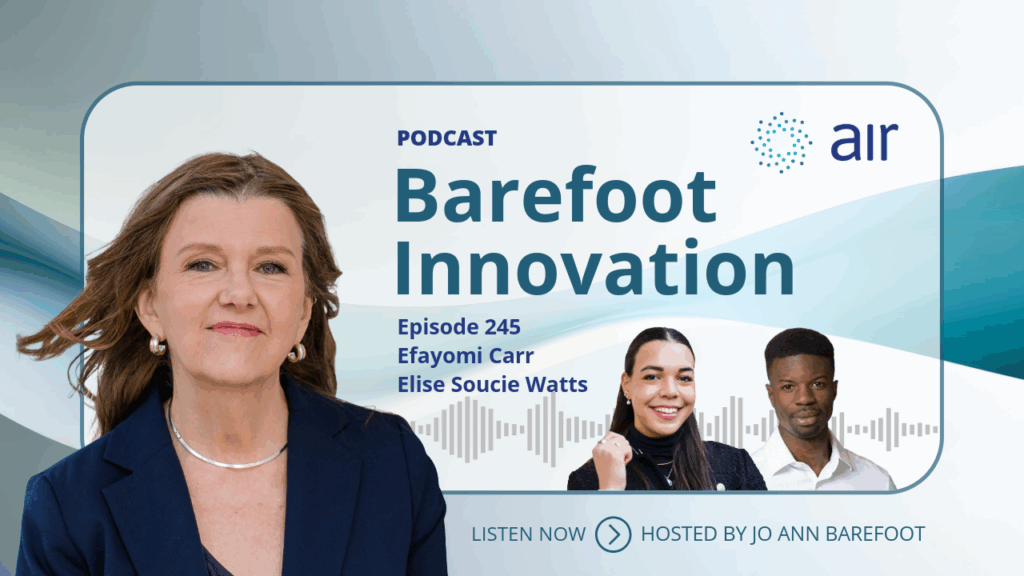
Discussions highlighted both the value of shared global frameworks and the challenge of operationalizing them within specific national contexts. These themes were explored further in a podcast hosted by Jo Ann Barefoot, Co-founder and CEO of AIR, with guests Efayomi Carr of Flourish Ventures and Elise Soucie Watts of GDF.What emerged clearly is that principles alone are not enough. Regulators need practical interpretations, peer learning, and locally grounded evidence to move from alignment on what should be achieved to clarity on how to achieve it.
Building on this need, AIR will capture and share insights from global and domestic regulators as they navigate stablecoins in their respective markets. These perspectives will explore how authorities are approaching issues such as foreign-currency usage, bank disintermediation, licensing models, and supervisory tools — often under conditions of uncertainty and rapid market change.
Alongside these insights, in-country technical workshops will provide space for regulators to stress-test approaches against local market realities, engage with peers, and explore sequencing options that align innovation with stability.
Together, these efforts will inform AIR’s forthcoming Africa Chapter, expanding on Global Digital Finance’s Global Regulatory Playbook. The aim is not to create a one-size-fits-all rulebook, but to ground global principles in African contexts — reflecting diverse monetary systems, levels of digital adoption, and development priorities.
Stablecoins are raising big questions about payments, sovereignty, and inclusion — and no one has all the answers yet. What’s clear is that progress won’t come from replicating global rules and approaches without regard for local context. It will come from collaboration, learning by doing, and productive dialogue between the public sector, industry, and peers facing similar challenges.
That’s where AIRs multi-phase program of work fits in. By convening public-private partnerships and creating spaces for practical exchange, we help regulators and market participants share what’s working, what isn’t, and why context matters. As the focus shifts toward real-world impact, we invite those interested to engage in this program — bringing local insight to global debates and helping shape stablecoin approaches that are safe, inclusive, and fit for purpose.
If you are interested in finding out more about this project and our upcoming program of work relating to stablecoin regulations, please reach out to AIR’s Innovation Programs Lead Lauren Cassells.
Stay informed by joining our mailing list